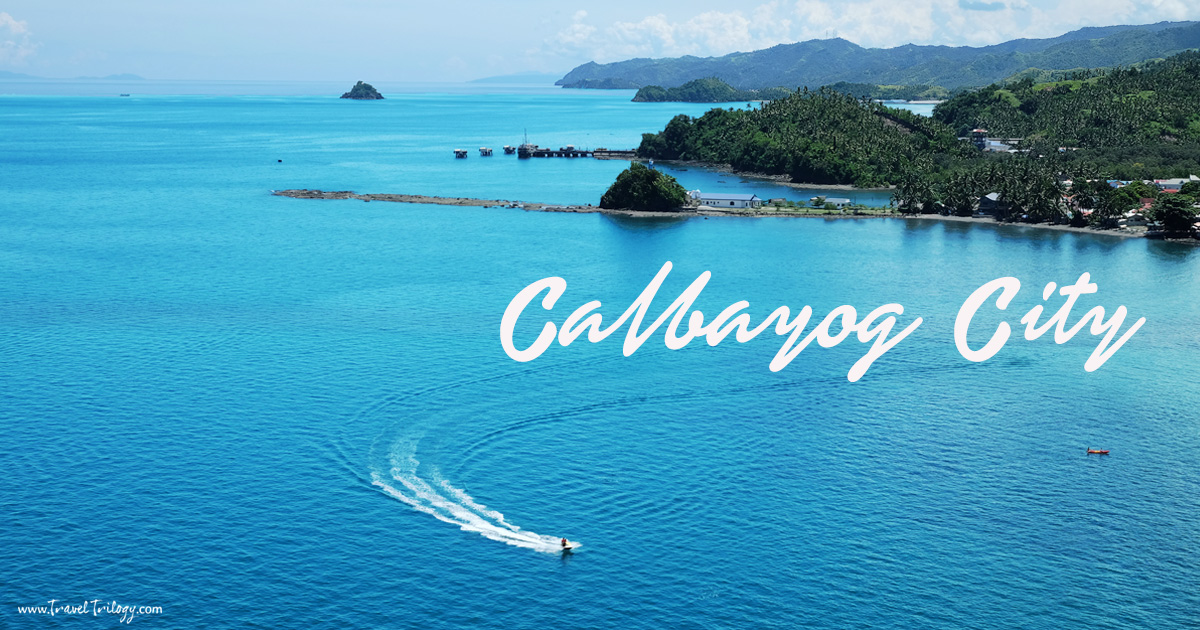
Calbayog, officially the City of Calbayog, (Waray: Syudad san Calbayog; Cebuano: Dakbayan sa Calbayog; Tagalog: Lungsod ng Calbayog) and often referred to as Calbayog City, is a 1st class city in the province of Samar, Philippines. According to the 2015 census, it has a population of 183,851 people.
History
Calbayog’s early history has been associated with the introduction and spread of Catholicism in the country. Calbayog started as one of the small settlements in the Island of Samar, an area assigned to the Jesuitmissionaries. Jesuit chroniclers, as early as the 17th century, notably Fr. Ignacio Alcina, wrote many accounts about it and its people. Jesuit records and reports referred to the settlement initially as Ibatan and Jibatang (Hibatang). In the annual report of 1739 the name Calbayog appeared for the first time. Fr. de Huerta, a 19th-century Franciscan writer, noted in his work Estado Geografico that in earlier times, Calbayog was called Tiayban for having been founded near a river of the same name. Then it was transferred due to a flood to the shore of the Hibatang River, whose name it took. Then again the settlers transferred to the place that they permanently occupied and took the name Calbayog.
Hibatang had already been a small settlement at the beginning of the 17th century. It slowly occupied a prominent place among the several small settlements. It became a visita (a large barrio with a chapel, similar to a chapelry in Britain) of Capul under the jurisdiction of the Parish priest of that town. The church of Calbayog were built from a scree formation near Malajog, shortest distance is now the Malabungto bridge. After the expulsion of the Jesuit missionaries from the Philippines in the 18th century, the administration of the parishes in Samar was handed over to the Franciscan friars.
Calbayog as a town and parish during the Spanish period was composed of several villages, the most populated of which are called visitas. Calbayog grew from visita size and became a pueblo (town). It was created a separate parish in 1785. Separated from the ecclesiastical jurisdiction of the parish priest of Capul, it was later given its own minister, becoming a religious center. Its parish priests cared for the spiritual needs of the people living in what are now Calbayog City, the municipalities of Sta. Margarita, Sto. Niño and Almagro. By the late 19th century a number of visitas became the poblaciones when new towns were created from Calbayog. They were Caybago (later called Oquendo), Sta. Margarita, Weyler (later called Tinambacan) and Sto. Niño.
In 1878, Calbayog was hit by a cholera epidemic, killing almost one half of the total population. Fr. Sebastian Cordova was forced to leave to save himself from the disease, bringing Biktoy with him as his sacristan. In Manila, Biktoy was a working student, serving the convent without sacrificing his studies. One year after his graduation, Fr. Cordova recommended Biktoy work for the Spanish Army. He was trained and accepted as a corporal. After a year, he was promoted and commissioned to become the second lieutenant in the infantry battalion of the Spanish Army. His first deployment and jurisdiction as an officer was in the whole Visayan Region.
 CalbayogTourism